2. It's ok if you don't know everything. No one knows everything. 3. It's ok to be a little insane.... most successful people are.
4. Be a team player, and be the MVP.
5. Be patient, go with the flow, your chance will come.
Read through the 7 habits book - link - this book is a best-seller for a reason!
Habit 1: Be Proactive Take initiative in life by realizing that your decisions (and how
they align with life's principles) are the primary determining factor
for effectiveness in your life. Take responsibility for your choices and
the consequences that follow. Habit 2: Begin with the End in Mind Self-discover and clarify your deeply important character values and
life goals. Envision the ideal characteristics for each of your various
roles and relationships in life. Habit 3: Put First Things First A manager must manage his own person. Personally. And managers should
implement activities that aim to reach the second habit. Covey says
that rule two is the mental creation; rule three is the physical
creation. Habit 4: Think Win-Win Genuinely strive for mutually beneficial solutions or agreements in
your relationships. Value and respect people by understanding a "win"
for all is ultimately a better long-term resolution than if only one
person in the situation had got his way. Habit 5: Seek First to Understand, Then to be Understood Use empathic listening to be genuinely influenced by a person, which
compels them to reciprocate the listening and take an open mind to being
influenced by you. This creates an atmosphere of caring, and positive
problem solving. Habit 6: Synergize Combine the strengths of people through positive teamwork, so as to achieve goals no one person could have done alone. Habit 7: Sharpen the Saw Balance and renew your resources, energy, and health to create a
sustainable, long-term, effective lifestyle. It primarily emphasizes
exercise for physical renewal, prayer (meditation, yoga, etc.) and good
reading for mental renewal. It also mentions service to society for
spiritual renewal.
7.2 Attitude Ability is what you're capable of doing Motivation determines what you do. Attitude determines how well you do it. - Lou Holtz
7.4 Keys to effectiveness Take time to study! 2 hours of study outside of class for every hour in class.
Go to class, keep up with class, participate in class, take notes in class. Practice - read example problems, then solve a few problems on your own. Study in groups
7.5 Test Taking
Come prepared (be there early, with pencils, paper, etc.) Skim through entire test before starting Do the easy problems first keep track of the time Go for partial
credit - don't leave anything blank - if you know it's wrong, explain
that you know it is wrong, and write down your thinking process. Don't erase your work - just put a single line through it (you might get more partial credit) Check over your answers, and re-check them. Don't leave early. Go over the graded test - correct mistakes, study it for the next test.
7.6 Make the most of your professors / tutoring centers You paid for it - might as well use it!
1. Do your math homework. 2. Form good study habits. 3. Get to know your professors. 4. Work in a study group. 5. Get a life. Have friends, hobbies, recreational activities.
Group Discussion:1. Think about a time when you struggled in either a class, or at a job. In hindsight, if you could go back and change something that you did, what would you change?
2. Think about your classes and work load this semester. What is going to be your biggest challenge? What are you going to do to meet that challenge?
Fwd: Fwd: In case you need it!
Faculty Senate
Emergency Fund – Report
The faculty senate
emergency fund committee met over the summer and arrived at the following
recommendations.
1.The
Faculty Senate Emergency Fund will remain a pool of money intended to be used
by students who experience an unforeseen emergency that would otherwise affect
their academic performance. Lee Ann Liebst will continue to facilitate this by
accepting applications from students sent to her by Faculty, Counselors, and
other staff members.
2.An
electronic database has been developed for record keeping and the committee
will present the data periodically at FS meetings.In addition to contact information, a record
of the intended use of the money will be collected and categorized as: health,
utilities, rent, transportation, food, academics, or other.
3.In
order for the silent auction donations to be classified as a tax write-off,
the proceeds had to be deposited into the Foundation account.There are different rules and regulations
associated with this account compared to the fund previously used which has
led to the following changes:
a.The
previous amount of $75 set by petty-cash rules is no longer valid and an
amount of $100 is the committee’s recommendation for the limit.
b.The
money from this fund will be distributed as a scholarship so no promissory
note will be signed and no expectation of repayment will be communicated.
c.The
money will be distributed directly from the Foundation account to the student
in the form of direct deposit or check.
d.We
will discontinue the practice of purchasing text books from the bookstore for
the student and instead they will be allowed to price-shop and make their own
purchases.
e.In
addition to the scholarships described above, the committee has also worked
with the library to establish a separate process for loaning of
textbooks.Faculty who are able to
obtain additional texts from the publisher can now get the books barcoded
through the library and loan them to students who cannot afford the text.Using the library check-out process will
ensure that we receive the books back at the end of the semester.The library does not have space to store
them, but is willing to handle the circulations needs.The process will be:
·Faculty or staff member takes text books to
library to be entered into the system (barcoded).
·Lori O’Dell in reserves at the bookstore is
willing to store a few books if you prefer or you can keep the books personally.
·When a student approaches Lee Ann with a need
she will contact the instructor for the course and ask if they have a book
available.If not, the student can
apply for the scholarship.If so, the
book is checked out.
CHECK-OUT/CHECK-IN:
If book is housed at the library student simply checks out like they would a
reserve book.If the book is housed by
the professor or a staff member then the student can simply get it from them
and the professor/staff member will copy front and back of student ID and the
barcode on the book and email to Lorelie.E.Odell@lonestar.edu.Alternately, the professor can walk the book
over to the library with the student.
We live in the information age. Change is expected. New generations do not do things the way older generations did. Now: Make a house frame in a single day Then: 200 years to build a church.
Discussion question:
Why were there so few innovations in the early
years? We have progressed more in the last 200 years, than in the previous 5,000+ years.... For
thousands of years, people farmed with crude manual labor, lived their
whole life within a small radius, battles were fought with spears and
arrows - technology was stagnant for thousands of years...
- Communication & Transportation.
No printing press, no internet, no phones, everyone had to reinvent the
wheel for themselves because they could not learn from anyone except
the people living in the same village as them.
Moral of the story?
It's important to learn how to write, present, and otherwise share information. Information is key to engineering.
Prehistoric Culture: - No math or science - No written language - Limited verbal language - Limited means of transportation - They didn't go to school - Spent most of life as hunter / gatherer - Built using trial and error - Used intuition - Craftsmen Lesson of Prehistoric Man:
You can make things without understanding the science behind why it
works.... but the more you understand, the better your product will be. Discussion Question: Are we better off? Archimedes
refused to release information that could be used to make more
effective weapons; he knew it would be used for evil... only when his
home city was no longer able to hold off Roman attacks did he release
his inventions to the military.
1.3 Earliest Days - improved ways to hunt and fish - methods for providing shelter - Weapons for power struggles - religious observances Everyday life was an engineering project. Every person was an engineer
Egypt and Mesopotamia The dawn of specialization. -
Toolmakers concentrated on making tools, Farmers concentrated on their
farm, hunters concentrated on hunting. Working cooperatively in larger
communities allowed everyone to attain greater skills in areas of
specialization. 4000-2000 BC - copper and bronze tools - stone tools - development of the plow - wheel, sailing boat, methods of writing Pyramids 2700-2500 B.C.
The great Pyramid - largest masonry structure ever built - 756 feet per side, 480 feet tall - dimensions indicate they understood 3.14159 - 2.3 million stone blocks, each weighing between 2.5 tons (5,000 pounds) to 20 tons (40,000 pounds) - 58,000,000 tons total. To build it, had to- transport large stones long distances - aligned almost perfectly North South - create an almost perfect square (only a few inches off) - symmetrical, precise angles -
Ingeniously design internal chambers that would not cave in under the
immense weight of the rocks above it through use of relieving chambers
above rooms. - Precision achieved despite being built on irregular rocky knoll. - Has survived earthquakes, climate changes, etc. still standing after thousands of years. - the only one of the 7 wonders of the world still standing.
1.4 Ancient Engineering Parthenon in Athens : 447-438 B.C.House 40' tall Athena statue Ratios and dimensions indicate an understanding of math.
Roman Aqueduct:
Roman Roads - 4-6" bed of sand - large flat stones - clay cement - retaining walls - concrete - Gravel - roads were 2 to 5 feet thick - Romans understood the importance of transportation - roads bound their empire together. - roads encouraged the free exchange of ideas, joined otherwise isolated communities.
The Great Wall of China: 220 B.C. Purpose - military - repel Mongolians, protect commerce. 3,080 miles long
Metallurgical and Materials Engineering:
Stone Age - ended between 4500 BC and 2000 BC with the advent of metalworking.
Bronze Age -
The use of copper and it's alloy bronze (Copper + Tin)
Copper melts at 1,085°C
Tin - melts at 231.9°C
Iron Age -
Iron melts at 1,538°C
Harder
to melt - harder to make, plus you have to worry about impurities
introduced in the heating process. (Impurities generally make iron
brittle and worthless)
The
stronger the material a society had, the more it could build, the more
powerful the military (long swords vs. short swords) the more powerful
the society.
Engineering is dependent on the strength of the materials it has to work with.
1200 B.C. - better iron, better swords - Siege towers - Greeks invent manufacturing - Archimedes introduces math - high quality concrete used for roads, bridges, and aqueducts in Rome. AD 1-1000 - Chinese develop math
- Gunpowder is perfected - Cotton and silk manufactured AD 1000-1400 - silk and glass industries grow - Leonardo Fibonacci (1170-1240) invents algebra
AD 1400-1700
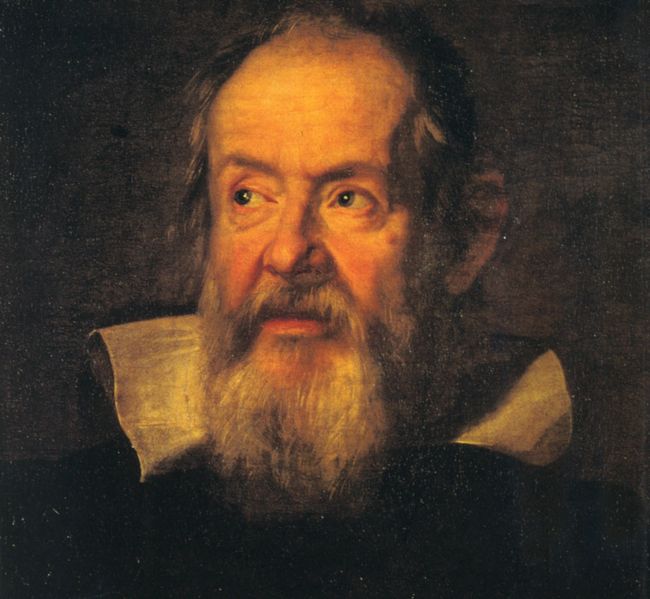
- Metallurgy! De re Metallica by Georgius Agricola - First timed bomb - Giambelli - The first water closet (toilet) England - Galileo makes and looks through telescopes - Windmills - Leeghwater
- First vacuum - Guericke
- Pendulum-driven clock - Huygens
- Watch spring - Hooke
- Royal Society of England - first science community
- Isaac Newton makes first reflecting telescope
- Languedoc Canal
- First steam pump - Savery
- Agriculture, mining, textile, and glass-making industries expanded
- Scientific Method originates
- Humanities separated from science
- Boyles' Law - gas pressure varies inverse with volume
- Calculating machine - Leibniz
AD 1700-1800
Electricity! Leyden jar
Extra Credit - make, bring in, explain, and demonstrate a Leyden jar.
1760 Industrial Revolution!
- James watt makes first rotary engine - 1st Civil Engineering School - First submarine - pudding furnace, and crucibles for making iron 1800-1825 - Automation - First railroad locomotive
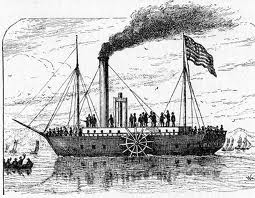
- Fourier - complex wave = sum of simple waves - Fulton steamboat service - Chemical symbols developed - Wire telegraph -photography - electromagnetism -thermocouple - Aluminum - Electric current in motors - Andre Ampere - Thermodynamics - Carnot 1825-1875 Vulcanized rubber by Charles Goodyear
-iron hulled steam engine
- rotary printing press
- reinforced concrete
- Singer invents sewing machine
- symbolic logic - Boole
- celluloid - synthetic plastic - Alexander Parkes
- Mass produced steel - Bessemer
- First oil well drilled in Pennsylvania
Typewriter perfected
Challenge Ocean Expedition
1875-1900
-Alexander Graham Bell patents the telephone
-Phonograph - Thomas Edison
- Light bulb - Edison
Steam turbine
Gas engine - Daimler
Automobile - Karl Benz
1900-1925
- My grandparents were born The "golden" generation has lived long enough to see: - wright brothers complete first flight
Detroit center of auto industry stainless steel in Germany Tractors First commercial airplane between London and Paris
Diesel locomotives 1925-1950 - Sound recordings - Baird invents TV
- VW beetle - First nuclear bomb
Transistor 1950-1975
Computers
first artificial satellite Lasers integrated circuits first manned moon landing
1975-1990 Supersonic transport from US to Europe Cosmonauts Columbia Space Shuttle First artificial human heart 1990-Today Robots walk on Mars
Computer speed increased Chunnel from England to France
Kuala Lumpur
Thunderhorse...
Large Hadron Loop finds "God" particle?
What will you see in your lifetime?
Where do you fit in with all of this?It is estimated that to produce just one pound (0.45 kg) of honey, the
average hive of 20,000 to 60,000 bees must collectively visit millions
of flowers and travel the equivalent of two times around the world. Over
its short lifetime of just a few weeks to four months, a single
honeybee’s contribution of honey to its hive is a mere one-twelfth of
one teaspoon.
Though seemingly insignificant when compared to the total, each bee’s
one-twelfth of a teaspoon of honey is vital to the life of the hive.
It's not about the single bee - it's about the hive. Be part of something bigger than yourself!
ENGR1201: Group Homework assignment #1:
Engineering Product Paper & Presentation. Due: 9-2-2014
For this group assignment, choose something that was created by an engineer, and create a 4-5 page long report and presentation on it. Choose something sufficiently complex that requires advanced engineering skills to build (in other words, don’t choose something as simple as “a table” to do your report on), but specific enough that a general understanding is possible in a short report (ie, instead of choosing something like an entire airplane, choose only one part of the airplane, like a jet engine, to do your report on.) Use your own words, and reference internet sites (or books) that you get your information from.
Heading: should include class name, date, project title, and the names of all the group members.
Section 1: (10 points)
Find, and print out a diagram of this product using the image search tools on google. Briefly explain what it is, what it does, and how it operates.
Section 2: (10 points)
Explain the process used to make this product including what company makes it, what raw materials were used, how they were formed, and how different parts of the product were assembled.
Section 3: (10 points)
Discuss different models of this product, and how the design has evolved through time.
Section 4: (10 points)
Make a list of several different engineering disciplines that were involved in making the product, and explain what each type of engineer contributed. Include a short biography on one prominent engineer who significantly contributed to the existence of your chosen product.
Presentation: (40 points)
Print out one or two pages per section that summarize your findings. You may use the class document camera, but you should not just read straight from your slide.
Keep it brief! 2 minutes per section, skip the details, and present only the general idea of the thing. Be prepared to answer a few simple questions as a group at the end of your presentation.
Format: (20 points)
See notes on how to write a technical document. Your report should have bold headings, subheadings, organized lists, and references.
********************************************************************************** Example Product: 4-stroke internal combustion engine.
Section 1:. Diagram of a 4-stroke internal combustion engine:
Engine Block:
(1) ** Study these diagrams, watch instructional youtube videos, and be prepared to explain the operation during the class presentation.
Section 2: Production of internal engine.
Raw materials.
Mark Wan from the AutoZon Technical school reports that most engines are now made out of lightweight Aluminum that is coated with either cast iron or Nickel-silicon carbide to reduce friction between the parts.(2) The materials that combustion engines are made from has changed from cast iron to Aluminum alloys in order to reduce the weight of the engine and produce higher energy efficiency.
Process.
The engine block is created by “sand casting” or melting the desired aluminum alloy, and then pouring the molten metal into a sand mold. After the metal hardens, the sand is removed, and the engine block is machined into it’s final form. (3)
The pistons, crankshaft, and other rods are created through a forging and forming process where metal is heated and forced through a die. The forging process increases the strength of the metal by introducing atomic packing defects which prevent slip planes from propagating in the microstructure of the metal. (4, 5)
Assembly:
Parts are assembled through a combination of machines and manual labor. (6)
Example companies that produce combustion engines:
GM, Ford – United States
Choose and highlight what you believe to be the most important developments of your product.
Section 4: Engineering Disciplines needed in creating an internal combustion engine:
- Chemical Engineer – Refines the fuel used in the engine.
- Mining Engineer – blasts away rocks to reveal ore veins, and mine the raw materials for the parts.
- Metallurgical and Materials Engineer – Creates the best material (lightweight, strong, corrosion resistant, performs under high-temperatures and pressures, cost effective) from the ore produced by the mining engineer.
- Mechanical Engineer – Designs engine using applied mechanics and thermodynamics calculations.
Give a short biography of one of the original engineers who first created or significantly improved the product.
References:
*** check out the "How It's Made" youtube videos - these are a great reference! Just do a youtube search with "How it is made ____________" fill in the blank with your product. Wiki is fine, materials from other schools are fine, materials from companies are fine - use a variety of different reference sources in your report.
Check out some of the "Modern Marvels" youtubes. (The "Engineering Disasters" series on Modern Marvels are particularly entertaining.)
~~~~~~~~~~~~~~~~~~~~~~~~~~~~~~~~~~~~~~~~~~~ From "Writing as an Engineer" by David Beer and David McMurrey
Noise and the communication process:
Find the mistakes in the following sentences:
a.) When they bought the machine they weren’t aware of it’s shortcoming.
b.) There was not a sufficient enough number of samples to validate the data.
c.) Our intention is to implement the verification of the reliability of the system in the near future.
a.)
The possessive form of it = its it's = it is
Example:
It's raining today. (It is raining today)
The dog wagged its tail.
b.)
redundant and wordy:
There weren’t enough samples to validate the data.
c.) Wordy
We want to verify the system’s reliability soon.
Focus on: - Why you are writing.
to inform, request, instruct, propose, recommend, persuade, record?
- Who are your readers?
Fellow engineers from your field?
Engineers from a different field?
Managers? Marketing?
Mixed audience?
Are you communicating technical information on a level your audience can use?
Are you using appropriate vocabulary, examples, definitions, and depth of detail? Satisfy Document Specifications
- Adhere to suggested length. - Format spec’s: headings, spacing, margin widths, font
Get to the Point
Put important info first.
Intro - briefly state key points, complaints, requests, and conclusions.
Do not include details until the body of the text.
Accuracy
Accurate references
Accurate directions and instructions
clearly state the conditions your data is applicable to.
Do not state opinions as facts.
Logical Presentation and organization:
Numbered sections and subsections with titles.
Organize in levels of detail and importance
main subject first
fill in the details later
First level headings should be in large font
separate headings from text by one line
indent minor headings
Use Lists Lists are often the most efficient way to communicate information. List material from most important to least important 3 types of lists:
numbered (or lettered) for procedures, or prioritized lists
checklists – for things you need to do
bullet lists – items in list occur in no specific order
Be Clear & to the point:
Ambiguity – comes from the Latin word meaning to be undecided, causes readers to see more than one meaning in your writing without knowing which is correct. Avoid words like “they” and “it” to be specific and avoid ambiguity. Ex: Ambiguous: Before accepting materials from the new subcontractors, we should make sure they meet our requirements.
Who are “they”? the materials? Or the contractors? or both?
Clear: We should make sure the materials from the new subcontractors meet our requirements before we accept them.
Ambiguous: The microprocessor interfaced directly with the 7055 RAM chip. It runs at 5 MHz.(What does “it” refer to?) Clear: The microprocessor interfaced directly with the 7055 RAM chip. The 7055 runs at 5 MHz. Vague – contains no useful information.
Example: “Take a few of these pills every so often.” How many pills? How often? Vague: The Robotics group is several weeks behind schedule. Useful: The Robotics group is six weeks behind schedule. Vague: The CF553 runs faster than the RG562 but is much more expensive.
Useful: The CF553 runs 84% faster than the RG562 but costs $4,320 - $2,840 more than the CF553.
Coherence – comes from the word “cohere” or stick together.
Clear transitions – use words like “because”, “this shows”, “in addition”, “thus” to link sentences to one another.
Use a clear subject for each paragraph
Everything should support the subject of report
Directness: Avoid suspense.
Put the most important information first.
example:Indirect: After a long and difficult development cycle due to factory renovation, the infrared controller will be ready for production in the very near future. Direct: The infrared controller will be ready for production March 4. Its development cycle was slowed by the factory renovation.
Avoid wordiness Avoid unnecessarily pompous or ostentatious & showy words. The point of technical documents is to convey information, not to make yourself look smart.
keep it simple and straightforward.
Remember, often your readers have English as their second language.
pompous - straightforward
Commence – start
Compel – force
Comprises – is
Employ – use
Endeavor – try
Fabricate – make
Finalize – end
Initiate – begin
Optimal – best
Prioritize – rank
Proceed – go
Wordy: I regret to say that at this point in time I basically do not have access to that specific information…
Clear: “I don’t know.”
Wordy – efficient
A large number of – many
At this point in time – now
Come in contact with – contact
Exhibits the ability to – can
In the event of – if
In some cases – sometimes
In the majority of instances – usually
Redundancy using multiple words to say the same thing
Redundant – clear
Alternative choices – alternatives
Actual experience – experience
Completely eliminate – eliminate
Connected together – connected
Collaborate together – collaborate
Very best – best
Component part – just say either “component” or “part”not both
Turning verbs into nouns: Write in an active voice (rather than passive) by using verbs instead of nouns.
wordy – clear
An analysis of the data – analyze
An investigation of xyz – xyz was investigated. made a selection – select
Procurement of services can be accomplished by – services can be procured by
Paragraph Length: Avoid walls of words rule of thumb – keep paragraphs to under 12 lines Most paragraphs will be much shorter. (one liners are just fine) Formatting
Margins – Use large margins to prevent pages looking too busy
Typeface – 10 to 12 point, Times New Roman, Arial
Use ample “white Space” around figures, headings, paragraphs, equations, & lists
Manage your time
Create and use a schedule
Give yourself time to edit
Team: divide and conquer, assign different sections to different people, but then have one person organize, and re-write it to create a smoothly flowing document (rather than a patchwork quilt of different writing styles)
Graphics & Charts – use numbered figure captions, refer to the figure in the text by the number.
Tables include a table heading. Heading go above tables (figure captions go below figures)
Report
References Should be numbered at the end of the report, and referred to in the text by their number.
Presentation Checklist:
~~~~~~~~~~~~~~~~~~~~~~~~~~~~~~~~~ Make sure you know how to format a technical paper before your next report!
Learn how to add numbered footnotes - (google it if you don't know how)
Use Headings - bold, numbered, underlined
Use bullet lists and numbered procedures instead of long paragraphs.
Use figure captions. Refer to figures in the text.
Use consistent format through entire report
If different people write different sections, make
sure when you put it all together it looks like one single report
written by one single person.
Don't plagiarize!
Warning - I do random google checks on what you have written. Cite your references, use small quotes if you need to, but most of the report should be in your own words.
Pay attention to simple grammar and spelling!
Eye halve a spelling chequer
It came with my pea sea
It plainly marques four my revue
Miss steaks eye kin knot sea.
Read what you have written out loud
if it sounds strange when you hear it, then fix it.
Read through the work of your team.
Pay them $0.25 for every mistake they find in your work.
Presentations
Practice with one another
practice in an empty room
videotape yourself, watch yourself, and fix what you see. Pay attention to people who impress you, - copy their techniques.
Use the LSC writing center!! ~~~~~~~~~~~~~~~~~~~~~~~~~~~~~~~~~~~~~~~~~~~~~~~ Start brainstorming ideas on what you want to do for your bigengineering project.
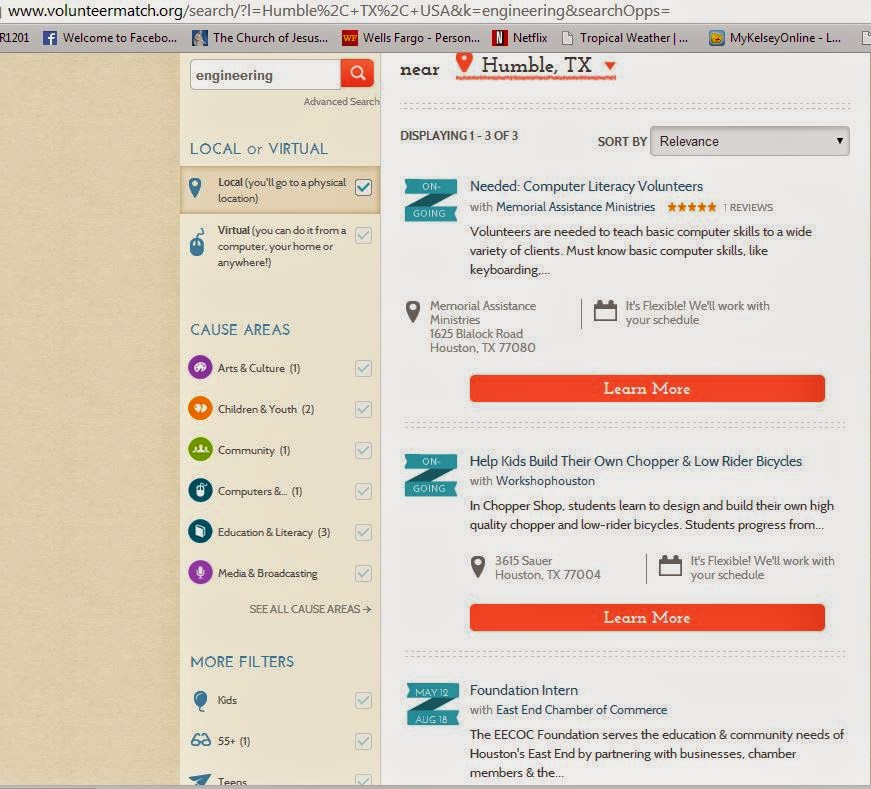
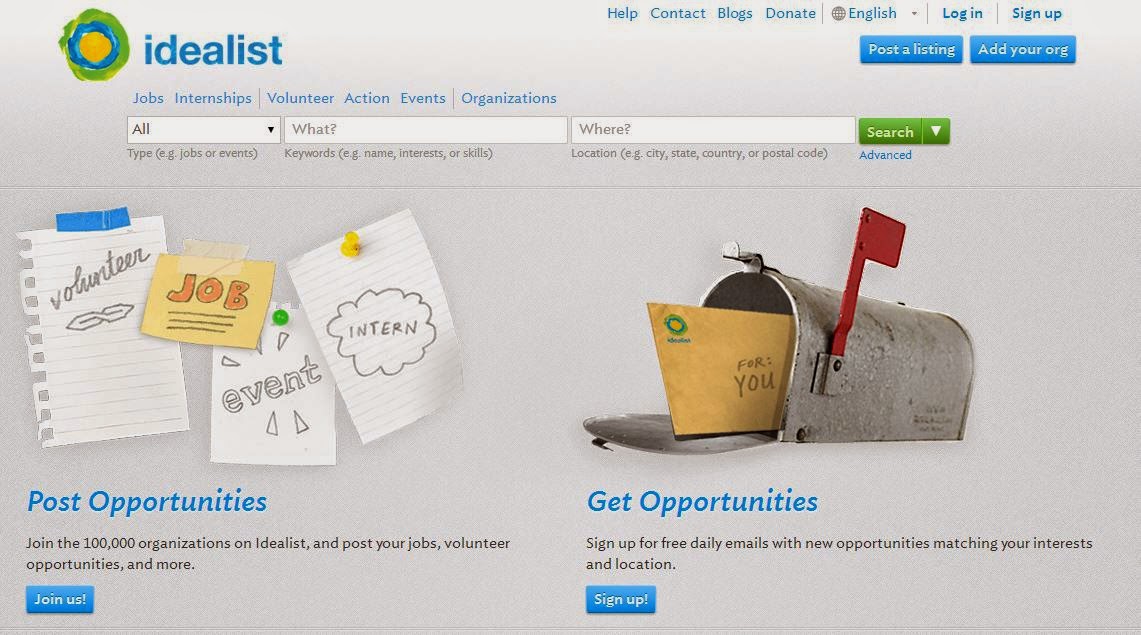
Consider choosing a civic engagement & community service
Humanitarian projects: Talk with local shelters, nursing homes, low income schools, or police to find needs in the area, then build something to fill that need.
Environmental project: create a device to conserve water or electricity. Create an innovate way to use trash, or otherwise promote recycling. Create something for local open space areas, such as design environmentally friendly camping sites, or build something to prevent trail erosion.
Misc:
Create a cool bike rack that promotes community exercise.
Refurbish old bicycles for disadvantaged children.
Make a local park more handicapped accessible
Design a toy or activity that promotes science, technology, engineering, and math at a local school.
Come up with a plan to improve the parking at LSC.